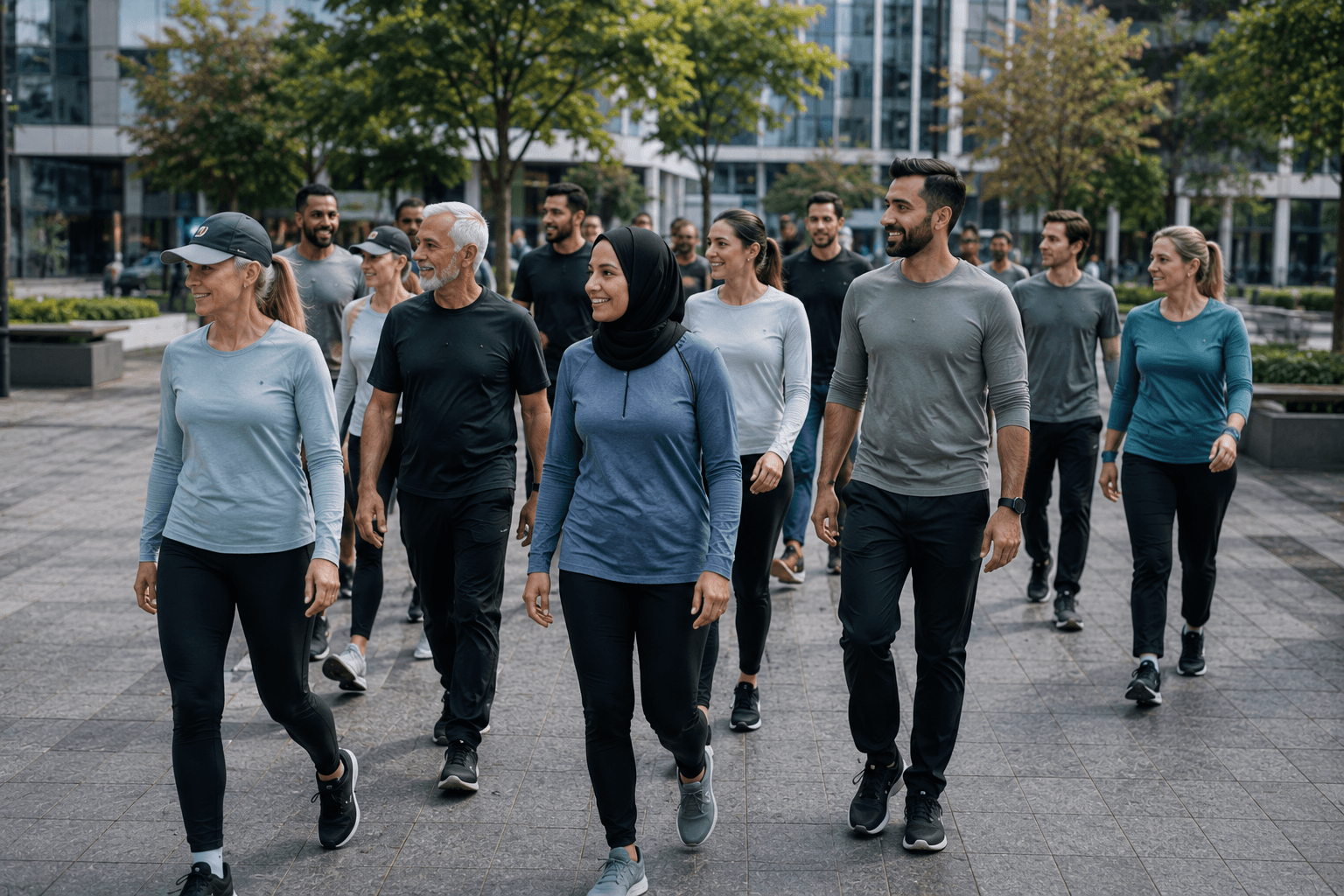
The Future of Employee Engagement Lies in Everyday Movement
Employee engagement isn’t built on big initiatives it’s built on simple, everyday movement...
Employee engagement has absorbed enormous amounts of organisational energy and budget over the past two decades. Surveys. Platforms. Events. Frameworks. Each iteration more sophisticated than the last. And yet the question that opened every strategy document ten years ago is still being asked in boardrooms today: what actually works?
The most effective answer emerging from the data doesn't come from a new technology category or a rethought HR philosophy. It comes from somewhere far simpler.
Engagement Isn't Built in Moments — It's Built Daily
Most traditional engagement strategies are event-driven. An annual survey. A quarterly town hall. A recognition programme that runs for three months before quietly disappearing. These moments have value — but they share a structural flaw. They're designed to interrupt the working day rather than to become part of it.
Genuine engagement isn't something employees feel during a company event. It's something they feel — or don't feel — in the texture of the ordinary working week. It emerges from daily behaviours, small repeatable actions that create an accumulated sense of connection, purpose, and belonging over time. You cannot engineer that feeling through intermittent campaigns. You have to build it into the everyday.
Why Movement Works as an Engagement Strategy
Walking has a quality that almost no other wellbeing or engagement initiative possesses: it requires nothing extra from anyone.
No gym. No equipment. No blocked-out calendar slot. It's already happening — between meetings, on lunch breaks, during commutes. A well-designed movement challenge doesn't ask employees to add something to their day. It gives structure and shared meaning to what they're already doing.
Beyond the physical benefits — which are well-documented and commercially significant — everyday movement does something that HR platforms rarely achieve. It creates natural interaction. Employees who are walking together, competing on a shared leaderboard, or encouraging a colleague to hit a milestone are having the kind of spontaneous, low-stakes interactions that build real connection. These are the moments that make a team feel like a team rather than a collection of job titles sharing a Slack channel.
From Individual Activity to Collective Engagement
The difference between a wellness app and a genuine engagement tool often comes down to a single design decision: individual versus collective.
When an employee tracks their own steps in isolation, the experience is useful but ultimately solitary. When those same steps are part of a team challenge — contributing to a shared goal, visible to colleagues, embedded in friendly competition — the dynamic changes completely. Participation becomes contribution. Personal effort becomes collective momentum. And the reason to show up each day shifts from self-discipline to something far more durable: not wanting to let people down.
This transition from individual activity to collective engagement is where step challenges generate returns that go well beyond physical health. Teams that have competed together communicate more openly. Employees who have supported each other through a four-week challenge have a relationship that didn't exist before it started. The challenge is the mechanism. The connection is the outcome.
The Rise of Continuous Engagement
The most forward-thinking organisations are moving away from the campaign model of engagement entirely.
Rather than designing isolated initiatives with a start date and an end date, they're building always-on experiences that give employees a continuous reason to participate. Not because they're told to, but because the experience is enjoyable, social, and visibly meaningful enough to sustain itself.
Everyday movement fits this model perfectly. It's inherently repeatable. It scales across organisations of any size without complexity or significant cost. And it keeps people returning — not to a programme, but to a shared experience that becomes part of how work feels.
A More Human Approach to Engagement
Underneath every engagement strategy is a simpler aspiration: people want to feel connected. They want to feel part of something. They want their working life to include moments of genuine energy, shared progress, and human interaction.
Everyday movement delivers all of that without demanding anything dramatic in return. It removes complexity, removes barriers, and creates something that feels natural rather than manufactured. The organisations that recognise this — that the most powerful engagement tool available to them is already built into every workday — are the ones building cultures that don't need to be pushed.
One step at a time.
"You cannot engineer a sense of belonging through intermittent campaigns. You have to build it into the everyday — and movement is already there."
Ready to run your next challenge?
Book a demo and see how STEPPI can help your team get moving.
The Future of Employee Engagement Lies in Everyday Movement
Employee engagement isn’t built on big initiatives it’s built on simple, everyday movement...
Employee engagement has absorbed enormous amounts of organisational energy and budget over the past two decades. Surveys. Platforms. Events. Frameworks. Each iteration more sophisticated than the last. And yet the question that opened every strategy document ten years ago is still being asked in boardrooms today: what actually works?
The most effective answer emerging from the data doesn't come from a new technology category or a rethought HR philosophy. It comes from somewhere far simpler.
Engagement Isn't Built in Moments — It's Built Daily
Most traditional engagement strategies are event-driven. An annual survey. A quarterly town hall. A recognition programme that runs for three months before quietly disappearing. These moments have value — but they share a structural flaw. They're designed to interrupt the working day rather than to become part of it.
Genuine engagement isn't something employees feel during a company event. It's something they feel — or don't feel — in the texture of the ordinary working week. It emerges from daily behaviours, small repeatable actions that create an accumulated sense of connection, purpose, and belonging over time. You cannot engineer that feeling through intermittent campaigns. You have to build it into the everyday.
Why Movement Works as an Engagement Strategy
Walking has a quality that almost no other wellbeing or engagement initiative possesses: it requires nothing extra from anyone.
No gym. No equipment. No blocked-out calendar slot. It's already happening — between meetings, on lunch breaks, during commutes. A well-designed movement challenge doesn't ask employees to add something to their day. It gives structure and shared meaning to what they're already doing.
Beyond the physical benefits — which are well-documented and commercially significant — everyday movement does something that HR platforms rarely achieve. It creates natural interaction. Employees who are walking together, competing on a shared leaderboard, or encouraging a colleague to hit a milestone are having the kind of spontaneous, low-stakes interactions that build real connection. These are the moments that make a team feel like a team rather than a collection of job titles sharing a Slack channel.
From Individual Activity to Collective Engagement
The difference between a wellness app and a genuine engagement tool often comes down to a single design decision: individual versus collective.
When an employee tracks their own steps in isolation, the experience is useful but ultimately solitary. When those same steps are part of a team challenge — contributing to a shared goal, visible to colleagues, embedded in friendly competition — the dynamic changes completely. Participation becomes contribution. Personal effort becomes collective momentum. And the reason to show up each day shifts from self-discipline to something far more durable: not wanting to let people down.
This transition from individual activity to collective engagement is where step challenges generate returns that go well beyond physical health. Teams that have competed together communicate more openly. Employees who have supported each other through a four-week challenge have a relationship that didn't exist before it started. The challenge is the mechanism. The connection is the outcome.
The Rise of Continuous Engagement
The most forward-thinking organisations are moving away from the campaign model of engagement entirely.
Rather than designing isolated initiatives with a start date and an end date, they're building always-on experiences that give employees a continuous reason to participate. Not because they're told to, but because the experience is enjoyable, social, and visibly meaningful enough to sustain itself.
Everyday movement fits this model perfectly. It's inherently repeatable. It scales across organisations of any size without complexity or significant cost. And it keeps people returning — not to a programme, but to a shared experience that becomes part of how work feels.
A More Human Approach to Engagement
Underneath every engagement strategy is a simpler aspiration: people want to feel connected. They want to feel part of something. They want their working life to include moments of genuine energy, shared progress, and human interaction.
Everyday movement delivers all of that without demanding anything dramatic in return. It removes complexity, removes barriers, and creates something that feels natural rather than manufactured. The organisations that recognise this — that the most powerful engagement tool available to them is already built into every workday — are the ones building cultures that don't need to be pushed.
One step at a time.
"You cannot engineer a sense of belonging through intermittent campaigns. You have to build it into the everyday — and movement is already there."
Ready to run your next challenge?
Book a demo and see how STEPPI can help your team get moving.
The Future of Employee Engagement Lies in Everyday Movement
Employee engagement isn’t built on big initiatives it’s built on simple, everyday movement...
Employee engagement has absorbed enormous amounts of organisational energy and budget over the past two decades. Surveys. Platforms. Events. Frameworks. Each iteration more sophisticated than the last. And yet the question that opened every strategy document ten years ago is still being asked in boardrooms today: what actually works?
The most effective answer emerging from the data doesn't come from a new technology category or a rethought HR philosophy. It comes from somewhere far simpler.
Engagement Isn't Built in Moments — It's Built Daily
Most traditional engagement strategies are event-driven. An annual survey. A quarterly town hall. A recognition programme that runs for three months before quietly disappearing. These moments have value — but they share a structural flaw. They're designed to interrupt the working day rather than to become part of it.
Genuine engagement isn't something employees feel during a company event. It's something they feel — or don't feel — in the texture of the ordinary working week. It emerges from daily behaviours, small repeatable actions that create an accumulated sense of connection, purpose, and belonging over time. You cannot engineer that feeling through intermittent campaigns. You have to build it into the everyday.
Why Movement Works as an Engagement Strategy
Walking has a quality that almost no other wellbeing or engagement initiative possesses: it requires nothing extra from anyone.
No gym. No equipment. No blocked-out calendar slot. It's already happening — between meetings, on lunch breaks, during commutes. A well-designed movement challenge doesn't ask employees to add something to their day. It gives structure and shared meaning to what they're already doing.
Beyond the physical benefits — which are well-documented and commercially significant — everyday movement does something that HR platforms rarely achieve. It creates natural interaction. Employees who are walking together, competing on a shared leaderboard, or encouraging a colleague to hit a milestone are having the kind of spontaneous, low-stakes interactions that build real connection. These are the moments that make a team feel like a team rather than a collection of job titles sharing a Slack channel.
From Individual Activity to Collective Engagement
The difference between a wellness app and a genuine engagement tool often comes down to a single design decision: individual versus collective.
When an employee tracks their own steps in isolation, the experience is useful but ultimately solitary. When those same steps are part of a team challenge — contributing to a shared goal, visible to colleagues, embedded in friendly competition — the dynamic changes completely. Participation becomes contribution. Personal effort becomes collective momentum. And the reason to show up each day shifts from self-discipline to something far more durable: not wanting to let people down.
This transition from individual activity to collective engagement is where step challenges generate returns that go well beyond physical health. Teams that have competed together communicate more openly. Employees who have supported each other through a four-week challenge have a relationship that didn't exist before it started. The challenge is the mechanism. The connection is the outcome.
The Rise of Continuous Engagement
The most forward-thinking organisations are moving away from the campaign model of engagement entirely.
Rather than designing isolated initiatives with a start date and an end date, they're building always-on experiences that give employees a continuous reason to participate. Not because they're told to, but because the experience is enjoyable, social, and visibly meaningful enough to sustain itself.
Everyday movement fits this model perfectly. It's inherently repeatable. It scales across organisations of any size without complexity or significant cost. And it keeps people returning — not to a programme, but to a shared experience that becomes part of how work feels.
A More Human Approach to Engagement
Underneath every engagement strategy is a simpler aspiration: people want to feel connected. They want to feel part of something. They want their working life to include moments of genuine energy, shared progress, and human interaction.
Everyday movement delivers all of that without demanding anything dramatic in return. It removes complexity, removes barriers, and creates something that feels natural rather than manufactured. The organisations that recognise this — that the most powerful engagement tool available to them is already built into every workday — are the ones building cultures that don't need to be pushed.
One step at a time.
"You cannot engineer a sense of belonging through intermittent campaigns. You have to build it into the everyday — and movement is already there."
Ready to run your next challenge?
Book a demo and see how STEPPI can help your team get moving.